Celebrating
50 Years
of Tellington TTouch®
Welcome to our celebration of Tellington TTouch®
Throughout December 2025, we’re celebrating 50 years of the Tellington TTouch® Method – a heart-centred, respectful and empathic way of working with animals that has transformed lives all over the world since Linda Tellington-Jones first introduced it in 1975.
This page – and the videos below – are my tribute to Linda, her sister Robyn Hood, and the many TTouch Instructors who have inspired me. I’ll be sharing interviews with TTouch Instructors about how we use different aspects of TTouch, including bodywork and wraps, as well as groundwork and observational skills – along with practical “how-to” videos so you can try some of the techniques yourself.

Linda Tellington-Jones -
Founder of Tellington TTouch®
Robyn Hood - Senior Instructor & Co-Founder of TTouch®
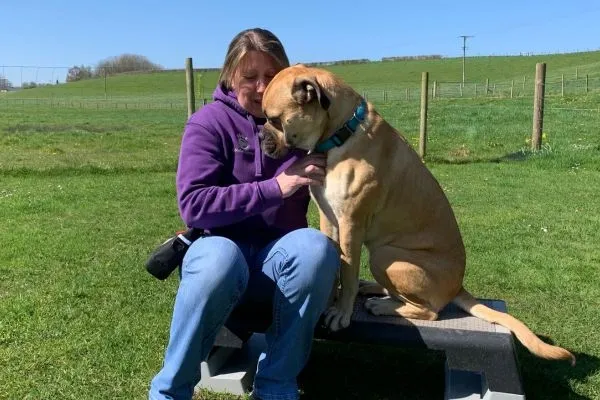
Hi, I’m Katharine Brunsch, a Tellington TTouch® Practitioner 1 for Dogs & Companion Animals.
My own journey with Tellington TTouch® started over 10 years ago, when I was looking for gentle, effective ways to help my own dog, Keto – and I haven’t looked back since. TTouch has supported not only my own dogs and my clients’ dogs, but has also been invaluable for my own mental health and well-being.
Starting on the 1st of December, I’ll be uploading a new video here every day for you to watch and enjoy – from in-depth interviews to short, practical “how-to” clips you can explore with your own dog.
If you’d like the videos delivered straight to your inbox, just click the button to sign up by email, and you’ll receive each new instalment as it’s released.
Celebrating 50 Years of Tellington TTouch® with Katharine Brunsch
In this opening video, I welcome you to our 50 Years of Tellington TTouch® celebration and share a short history of how the Tellington TTouch® Method began with Linda Tellington-Jones and grew over the decades. I also talk a little about my own journey into TTouch, starting with my dog Keto, and why it has become such an important part of my life and work with dogs.
What is Tellington TTouch® with Robyn Hood
In this video, I’m joined by Robyn Hood, Co-Founder and Senior Tellington TTouch® Instructor, and Linda Tellington-Jones’ younger sister. We explore the question “What is Tellington TTouch?”, as Robyn explains the key components of TTouch - including bodywork, TTouch Wraps, Groundwork and leading techniques, and how they help build calm, connection and confidence in dogs.
The Circle & a Quarter TTouch with Linda Tellington-Jones
In this video, I’m joined by Linda Tellington-Jones, Founder of the Tellington TTouch® Method. Linda shares the story behind the classic Circle and a Quarter TTouch and guides us through the Heart Hug TTouch. She explains where these touches came from, why they’re so central to TTouch, and how you can begin to use them with your own dog.
Pressure with
Tina Constance
In this video, I’m joined again by Tina Constance, UK Tellington TTouch® Instructor for Companion Animals and Equines. We look at how TTouch bodywork is different from massage, diving into the light, mindful pressure we use, how this affects the nervous system, and why in TTouch we like to say “TTouch is a message, not a massage.”
The Llama TTouch with Katharine Brunsch
In this video, I’ll show you the Llama TTouch – a soothing, calming touch that’s especially helpful for dogs who are nervous or anxious about being touched. Using the back of your hand and fingers makes the touch feel less threatening (you can’t grab with the back of your hand), so it’s a lovely way to begin and end a TTouch session. I’ll demonstrate how to use the Llama TTouch with my own dogs, Chloe and Remi, and how it can be combined with other TTouches in a session.
The Zebra TTouch with Katharine Brunsch
In this video, I demonstrate the Zebra TTouch (also known as the Zigzag TTouch) – a sliding touch that helps connect your dog’s whole body from front to rear. When done slowly, it can calm, and when done more briskly, it can gently stimulate or help get the attention of a nervous or hyperactive dog. I’ll show you how to use the Zebra TTouch while your dog is standing or lying down, and how this movement lets you “dip in and out” of different areas without putting too much focus on any one spot.
Observations with
Tina Constance
In this video, I’m joined by Tina Constance, UK Tellington TTouch® Instructor for Companion Animals and Equines. Together we talk about the vital role of observation in TTouch – looking beyond obvious body language to include coat patterns, posture and tension, and learning to see your dog with new, more curious eyes.
TTouch Ear Slides with Katharine Brunsch
In this how-to video, I share my favourite of all the TTouches – the Ear TTouches. We look at gentle ear slide touches, how to adapt them for different ear shapes, and how to read your dog’s body language so they stay comfortable.
Ear TTouches can help calm and settle dogs, support noise-sensitive dogs, reduce tension and even help prevent shock, all while building trust and connection around the head and ears.
TTouch & Mindfulness with Lindy Dekker
In this video, I’m joined by Lindy Dekker, our South African Tellington TTouch® Instructor for Companion Animals and Equines. Together, we look at the connection between TTouch and mindfulness, using Jon Kabat-Zinn’s 9 Attitudinal Foundations of Mindfulness as a framework. We discuss how qualities like patience, trust, non-judging and letting go can shape the way we approach TTouch, and how this mindful attitude can support both animals and their people.
TTouch Wraps with Katharine Brunsch
In this how-to video, I introduce the TTouch Body Wrap and show you how to start with a simple Neck Wrap, using soft, stretchy elastic bandages. Body Wraps gently increase your dog’s body awareness and can help reduce stress, tension, fear of loud noises, car sickness, and support older, stiff or recovering dogs by improving confidence and movement. The Neck Wrap is often the easiest place to begin, as it feels similar to wearing a collar and is especially helpful for dogs who hold their heads high or feel worried about things around their head, bringing awareness to this area and often creating relaxation and improved confidence.
TTouch Quarter Wrap & Half Wrap with Katharine Brunsch
In this how-to video, I demonstrate the TTouch Quarter Wrap and Half Wrap – two gentle Body Wrap configurations that help increase your dog’s body awareness (proprioception), confidence and balance. The Quarter Wrap brings attention to the front of the body and can help change postural habits and tension patterns, with gentle movement such as snuffling for treats or Free Work while wearing it. It’s also a lovely way to prepare dogs for wearing a harness, as the contact areas are similar. The Half Wrap builds on the Quarter Wrap with an extra crossover, bringing awareness to the middle of the body too and offering a greater sense of stability, especially for older dogs.
The Power of the Pause with Sage Lewis
In this video, I’m joined by Sage Lewis, Tellington TTouch® Advanced Practitioner for Companion Animals and TTouch for You, all the way from Madison, Wisconsin. Together we explore intuition and “The Power of the Pause” in TTouch – that intuition really is a deeper kind of paying attention, how pausing allows the dog’s nervous system to integrate new information, and why we sometimes use the acronym PAWS: Pause Allows Wondrous Stillness. We talk about giving dogs the freedom to move away during a pause, listening to their “whispers” through subtle feedback, and how “something happens when nothing happens”. Our conversation naturally flows into the role of conscious breathing for the human, and how a soft exhalation from the guardian can deepen stillness, trust and clarity for both dog and person.
Two Points of Connection with Katharine Brunsch
In this video, I share TTouch leading techniques using Two Points of Connection with either a double-ended lead or the TTouch Connector. By attaching the lead to both the chest and back rings of a well-fitting harness, we can support our dogs into better balance, gently reduce pulling and tension, and communicate in a way that feels clearer and kinder for both ends of the lead.
TTouch Groundwork with Katharine Brunsch
In this video, I introduce TTouch Groundwork – the Playground for Higher Learning, a slow, mindful “awareness course” for both dogs and humans. We explore elements such as the Labyrinth, different surfaces, poles and ladders, and the Star, and how they can build confidence, balance, coordination and focus. Rather than speed or perfection, the emphasis is on helping dogs move in new, non-habitual ways, releasing tension and growing their confidence step by step.
If you’d like more TTouch-centred support for dogs who pull on the lead or get “stuck” on walks, my upcoming Walking in Balance online course might be a great next step.
👉 Click HERE to see all courses and join the waitlist.
TTouch Enrichment Playground with Katharine Brunsch
In this video, I share how I use the TTouch Enrichment Playground / Free Work to build confidence and everyday life skills. By setting up different surfaces, heights, objects and foods, we give dogs the chance to explore with all of their senses while staying low-impact and self-calming. I show practical examples with Chloe and Remi – from learning to use stairs and ramps, feeling safer around crates and new objects, growing confidence in the bathroom and shower, to supporting positive muzzle training – and how Free Work can help dogs relax, experiment and gain confidence in their own time.
TTouch for Puppies with Marie Miller
In this video, I’m joined by Marie Miller, one of our four UK Tellington TTouch® Instructors for Companion Animals, to talk about TTouch for Puppies. We explore how the different components of TTouch – gentle bodywork, Enrichment Playground / Free Work, body wraps and groundwork / Playground for Higher Learning – can support young dogs as they grow. Marie shares how TTouch can help puppies who are mouthy, jumpy, easily over-excited or struggling to settle, and how these techniques can build calm, confidence and good habits for both puppies and their people.
Troika TTouch with Katharine Brunsch
In this video, I demonstrate the Troika TTouch – a circular touch that can both invigorate and relax, depending on the pressure and tempo you use. Troika involves a flowing circular pattern sliding over the coat, using the thumb and fingers in an opening-and-closing motion. It’s possibly the only circular sliding TTouch; with most other circular TTouches we move the skin rather than slide over it. Troika can help support the circulatory system, ease itchy spots without aggravating the histamine response, and is a useful option for dogs who are unsure of touch, as you can work with either the pads of the fingers or more of the nails. It’s also similar to the Zebra TTouch in that it’s a full-body TTouch, making it great for gently dipping in and out of different areas on your dog’s body.
TTouch for Fireworks with Toni Shelbourne
In this video, I’m joined by Toni Shelbourne, one of our four UK Tellington TTouch® Instructors for Companion Animals, to talk about TTouch for Fireworks and loud noises. We look at the signs that a dog is really struggling, what’s happening for them emotionally and physically, and how TTouch can sit alongside more traditional noise-phobia support. Toni explains how Bodywork, Body Wraps, Groundwork and Free Work can help worried dogs feel safer and more settled, how guardians can start preparing in the days and weeks before fireworks, and how to combine TTouch with other strategies at home. We also discuss common mistakes people make when trying to help frightened dogs, where to begin if you’re feeling anxious or helpless yourself, and Toni shares where you can find her “Help! My Dog’s Scared of…” books for extra support.
If you’d like step-by-step TTouch-centred support for your noise-sensitive dog, my Fear of Fireworks Self-Study Course gently guides you through practical ways to help them feel safer and more settled around loud noises. 👉 Click HERE to learn more and enrol.
Face & Mouth TTouch with Katharine Brunsch
In this video, I share gentle Head, Face and Mouth TTouches to support relaxation, emotional balance and clearer communication. We look at how soft TTouches around the muzzle, jaw and face can help with common issues such as barking, licking, chewing and mouthing, and how they can prepare dogs for dental care and handling in a kinder way. I explain why the mouth is so closely linked to the nervous system, learning and emotions, what to watch for in your dog’s tension patterns, and how to work slowly and safely so that “less is more” – giving your dog plenty of choice, pauses and time to adjust.
The Balance Lead & Balance Lead Plus with Katharine Brunsch
In this video, I demonstrate the TTouch Balance Lead and Balance Lead Plus – simple ways of holding a flat lead so you can safely contain your dog without tightening around the neck or triggering panic and frustration. By creating a loose loop over the chest and shoulders (or between the front legs in the Balance Lead Plus), we can gently redistribute weight, reduce lunging, and help dogs stay more balanced and calm in challenging situations such as vet waiting rooms, tight pathways, busy areas or around triggers. These techniques aren’t a replacement for training or giving your dog space, but they’re a very useful “safety net” tool when you need your dog close to you while still allowing them room to move, watch and self-calm.
TTouch for Rescue Dogs with Tina Constance
In this video, I’m joined again by Tina Constance, UK Tellington TTouch® Instructor for Companion Animals and Equines, to talk about TTouch for rescue dogs. We begin by exploring how TTouch can be used in rescue centres to support dogs before they’re adopted, helping them feel calmer and more settled in a stressful environment. We then look at what TTouch can offer newly adopted dogs, including the advice Tina would give to anyone bringing a rescue dog home, and gentle, practical ways to ease anxiety and build a sense of safety and trust.
TTouch Tail Slides with Katharine Brunsch
In this video, I demonstrate TTouch Tail Slides – gentle sliding touches along the tail to support relaxation, confidence and overall balance. Because the tail is an extension of the spine, working softly along it can help release tension through the back, pelvis and hindquarters, and can be especially helpful for dogs who are fearful, noise-sensitive, over-aroused or older with stiffness. I show how to go at your dog’s pace, starting with TTouches on the body and gradually including the tail, and how even a few light slides – offered with plenty of pauses and choice – can help shift tail carriage, reduce reactivity and build self-confidence.
TTouch for Older Dogs
with Rachel Jackson
In this video, I’m joined by Rachel Jackson of Well Balanced Animals, Tellington TTouch® Instructor for Companion Animals and Practitioner for Equines, to talk about TTouch for older dogs. We explore how the different components of TTouch – from gentle bodywork to support stiffness and arthritis, to Enrichment Playground / Free Work, Body Wraps, and Groundwork / Playground for Higher Learning – can help our “golden oldies” stay more comfortable, confident and engaged with life. Rachel also shares practical, whole-dog considerations for senior dogs, such as flooring, nail care and simple adjustments around the home, so we can better support their bodies, minds and emotions as they age.
TTouch Hair Slides with Katharine Brunsch
In this video, I demonstrate TTouch Hair Slides – gentle, soothing slides through your dog’s coat that can help calm the nervous system and deepen your connection. By slowly gliding your fingers from root to tip, following the natural direction of the hair, Hair Slides can release tension, support relaxation and offer a more pleasurable experience for dogs who may struggle with grooming. I show how to adapt Hair Slides for different coat lengths, and how to keep things soft, slow and comfortable so your dog can truly enjoy the experience.
50 Years of TTouch with
Linda Tellington-Jones
To finish this celebration in a very special way, I’m truly honoured to be joined by Linda Tellington-Jones herself – founder of the Tellington TTouch® Method. In this closing conversation, Linda and I reflect on 50 years of TTouch: how it began, how the name “Tellington TTouch” came about, and how this work has grown and touched animals and people all over the world. Linda shares highlights from her remarkable life as an innovative horsewoman, trainer and competitor, as well as memorable experiences working with many different species – including Keiko, the Orca from Free Willy. We also talk about what continues to inspire her in the work today, and of course, her favourite TTouch and why it holds such a special place in her heart.
Copyright @ Canine Support 2025. All Rights Reserved.