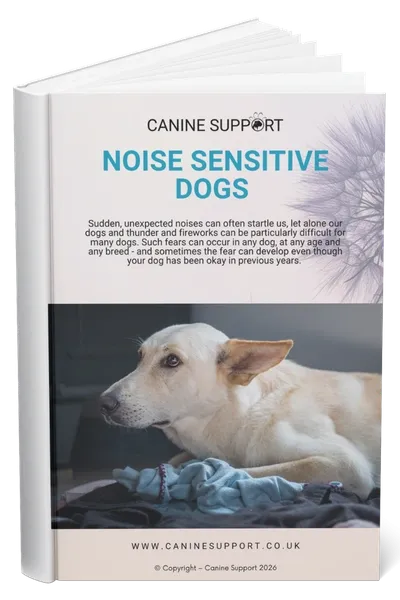
Fear of Fireworks
Self-Study Course
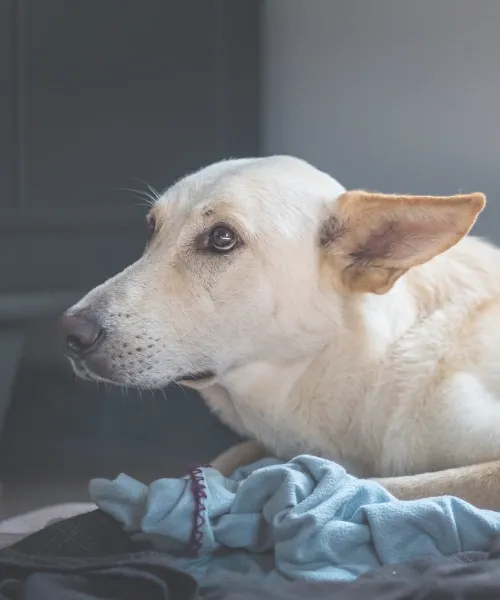
It's Crunchy Leaf Season! 🍂
Autumn can be a lovely time of year, but for guardians of noise-sensitive dogs, the changing leaves can also bring a feeling of dread as fireworks season approaches.
Watching your dog shake, pant, pace or hide after a sudden bang is heartbreaking. Their home should feel safe, yet unpredictable fireworks, thunderstorms and other noises can leave both of you on edge.
If you find yourself listening for every bang and wondering how your dog will cope, you’re not alone. Having a plan can help you feel more prepared and give your dog supportive choices when the noise begins.

How can this course help?
Although this course was created with fireworks season in mind, you can use these techniques whenever your dog is frightened or unsettled by noise. This could include:
- Fireworks and thunderstorms
- Cars backfiring, alarms and unexpected bangs
- Hot-air balloons, helicopters and other noisy vehicles
- Rook scarers and countryside noises
- Household sounds such as vacuum cleaners, washing machines and extractor fans
You’ll learn practical ways to prepare before a noisy event, support your dog while it is happening and help them settle and recover afterwards. You’ll also discover gentle ways to build their confidence between events.
You don’t need to complete the whole course before fireworks night. A clear roadmap will help you start with the techniques most useful for your dog now.

What You'll Learn
Every dog experiences noise differently, so there isn’t one approach that suits them all. This course gives you a range of gentle, practical options, allowing you to choose what feels right for your dog and work at their pace.
Understand your dog’s fear of noise
Learn what may be happening physically and emotionally when your dog hears a frightening or unexpected sound.
Make a practical plan for noisy events
Prepare before the noise begins, support your dog while it is happening and help them settle and recover afterwards.
Use gentle TTouch techniques
Learn bodywork and body-wrap techniques that can help reduce physical tension and provide calm, supportive contact.
Build confidence through Free Work and Enrichment
Use low-pressure activities involving movement, sniffing, licking and chewing to encourage self-calming and confidence.
Understand your dog’s body language
Recognise earlier signs of stress and notice whether your dog is asking for comfort, space or quiet companionship.
Work gently on noise sensitivity over time
Explore desensitisation and confidence-building techniques that can support your dog between noisy events.
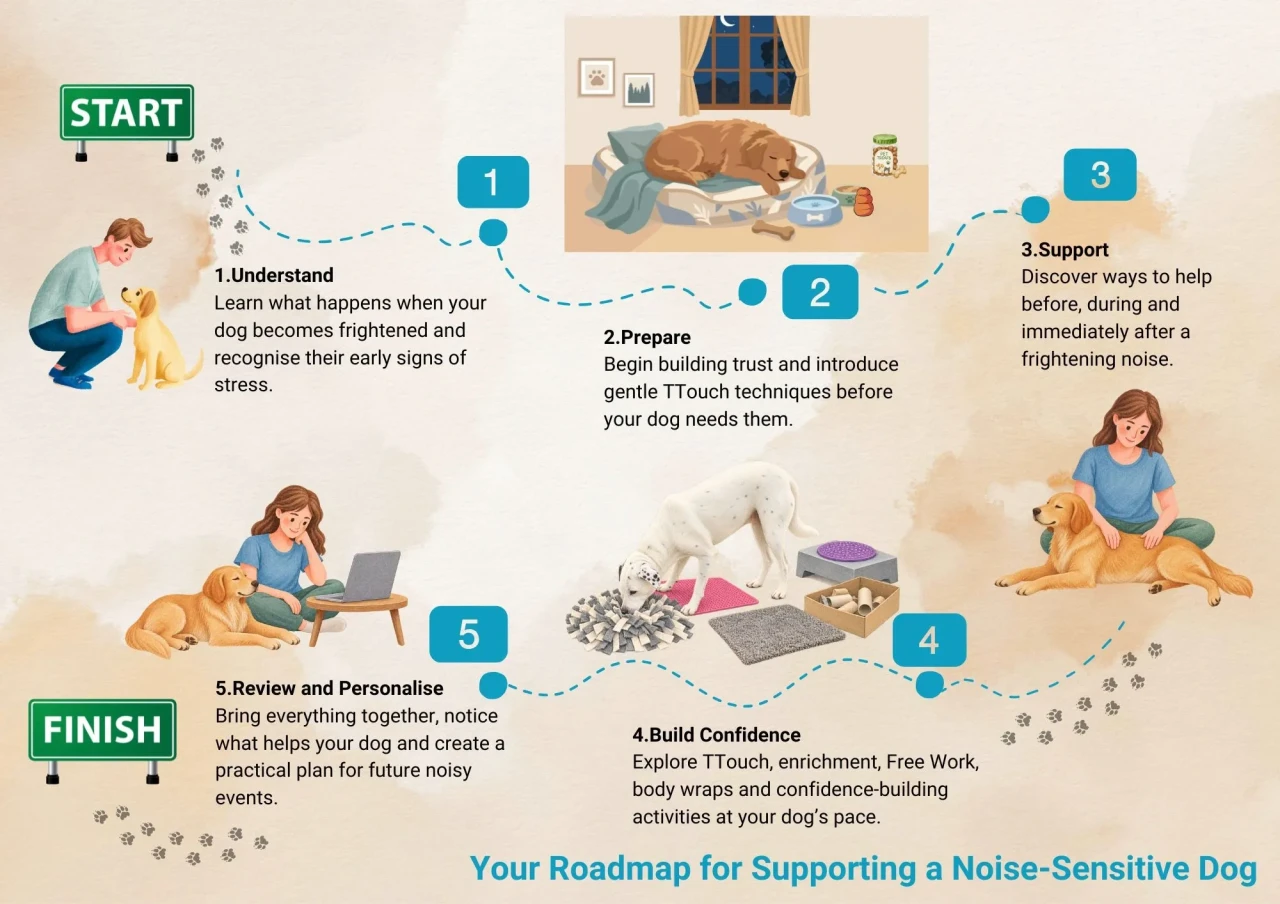
A Clear Journey Through the Course
You’ll follow five gentle stages, beginning with understanding your dog and learning to recognise what they may be communicating.
From there, you’ll explore practical ways to prepare, offer support and build confidence before bringing everything together in a plan shaped around your individual dog.
The course follows a clear order, with each section building on what you have already learnt. You can work through it at a pace that feels manageable for you and your dog.
Students receive the full roadmap and accompanying written guide when they enrol.
What’s Included
✓ Instant access to step-by-step video lessons
Watch the techniques being demonstrated and revisit them whenever you need a reminder.
✓ Downloadable guidance and practical resources
Keep the most useful information close at hand before, during and after a noisy event.
✓ A clear roadmap to help you begin
Identify the most useful steps for your dog without feeling that you must complete the whole course first.
✓ A private 30-minute Zoom with Katharine
Talk through your dog’s response to noise and decide where to focus your attention.
✓ Ongoing access to the course materials
Return to the lessons during future fireworks seasons, storms or other noisy events.
✓ An invitation to The Calm & The Curious
Join the private Canine Support client Facebook group to connect with other dog guardians and share your wins.
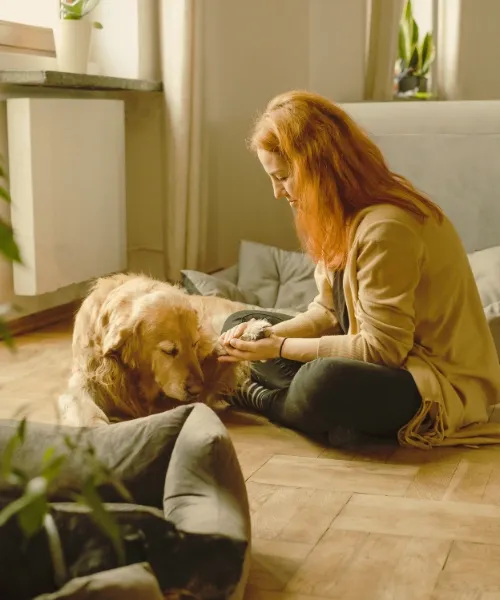
What Clients Have Said After Learning These Techniques
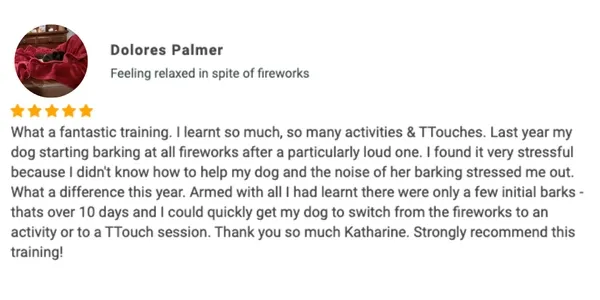
"What a difference this year."
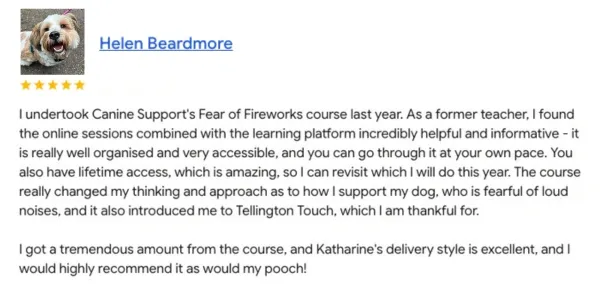
"I got a tremendous amount from the course."
Why Learn With Me?
I don’t just teach these techniques; I use them with my own dogs.
When Keto developed noise sensitivity at four years old, I experienced the same heartbreak you may be feeling now: watching her tremble, hide and struggle with fireworks and countryside noises. Tellington TTouch became an important part of how I supported her and helped her feel safer.
When Chloe joined our family, she was so sensitive to noise that I found myself tiptoeing around the house, worried that dropping a spoon or closing a door might frighten her. TTouch bodywork and Free Work became part of how I supported her as she developed greater trust, resilience and confidence.
Those experiences shape the way I teach: gently, practically and with respect for every dog as an individual.
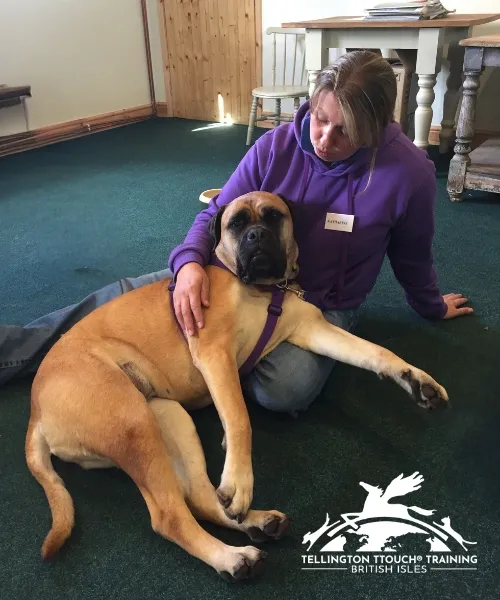
Ready to feel more prepared? Get instant access below and begin with a clear, manageable plan for supporting your dog before, during and after noisy events.
FREQUENTLY ASKED QUESTIONS
Is this course only for dogs frightened by fireworks?
No. Although the course was created with fireworks season in mind, the techniques can also support dogs affected by thunderstorms, vehicles, household appliances, alarms and other sudden or unpredictable noises.
Is it too late to begin if fireworks have already started?
No. Building confidence and working on noise sensitivity can take time, but there are also practical things you can do now to prepare your home and support your dog before, during and after a noisy event. The course roadmap will help you decide where to begin.
How is this course different from other noise-sensitivity courses?
Many noise-sensitivity programmes focus mainly on desensitisation, such as gradually introducing recordings of frightening sounds. Desensitisation can be useful, but it is only a small part of this course.
We also consider what is happening in your dog’s body before, during and after a frightening noise. You’ll explore Tellington TTouch techniques, body wraps, Free Work, enrichment, body language and confidence-building activities. This gives you a wider range of ways to support your dog, including during unexpected noises that you cannot prepare for or control.
The aim is to help you prepare for noisy events, support your dog while they are happening and help them settle and recover afterwards.
What is Tellington TTouch®?
Tellington TTouch is a gentle, choice-led approach that uses specific bodywork, body wraps and mindful movement. The techniques can help dogs release physical tension, develop greater body awareness and support their ability to settle and regulate after becoming frightened or startled.
Everything is introduced at the dog’s pace, and the course also includes non-touch options for dogs that are uncomfortable with physical contact.
Do I need any previous Tellington TTouch® experience?
No. The techniques are explained through step-by-step videos and downloadable guidance, so you can begin without any previous experience and work at your own pace.
What if my dog doesn’t enjoy being touched?
Every dog is an individual, and nothing in the course should be forced. Alongside TTouch bodywork, you’ll find non-touch options such as Free Work, enrichment, confidence-building activities and practical preparation.
Do I need to complete the whole course?
No. Begin with the roadmap and choose the lessons most relevant to your dog’s current needs. You can return to the remaining material whenever you’re ready.
How does the included 30-minute Zoom work?
After enrolling, you’ll find instructions inside the course for booking your private Zoom with Katharine. You can book it at any time, although you may find it most helpful after you’ve looked through the course or started working through the roadmap. This gives you time to identify any questions and decide what you would particularly like help with. You don’t need to complete the course before booking.
Will the course cure my dog’s noise sensitivity?
There is no single technique that can guarantee a cure. The course gives you a range of gentle, practical ways to understand your dog, reduce pressure, prepare for noisy events and support their confidence over time. If your dog experiences severe or sudden noise sensitivity, it is also sensible to speak with your vet.
Give your dog more ways to feel safe, and give yourself a clearer plan when the world gets noisy.
What Clients Have Said After Learning These Techniques
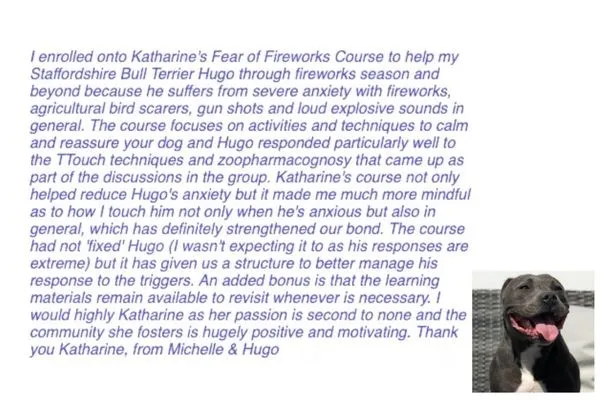
"The most successful fireworks time we've ever had!"

Not Ready to Join the Course?
You can still begin supporting your noise-sensitive dog today.
Download my free Noise-Sensitive Dogs ebook for practical ideas to help you understand your dog and support them around frightening or unexpected sounds.