Before We Touch: What Your Dog’s Body Language Is Telling You
 Katharine Brunsch
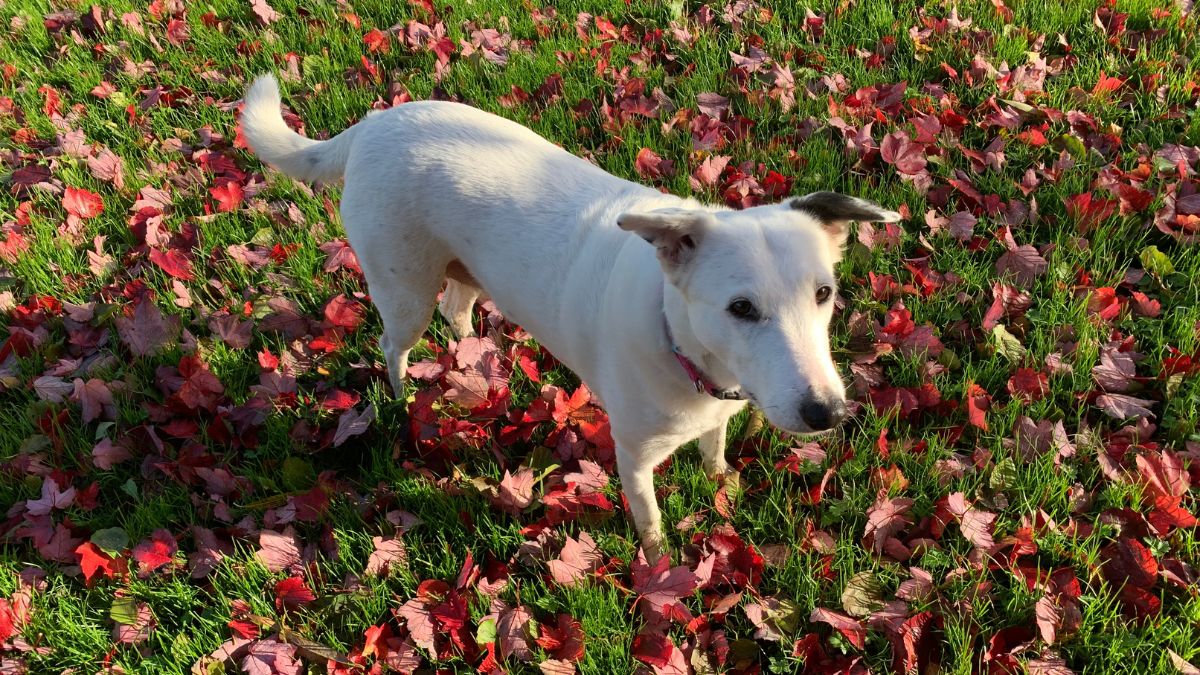
Learn how reading your dog’s body language before touch can build trust, safety and kinder everyday handling with Tellington TTouch®.
Our dogs are often communicating with us long before we reach out to stroke, groom, clip on a lead, fasten a harness or dry muddy paws.
Sometimes they tell us in big, obvious ways. They move away, bark, hide behind the sofa, freeze, or refuse to come closer. But much more often, the conversation begins quietly.
A breath changes.
A paw shifts.
The body leans away.
The face becomes still.
The dog looks at us, and we miss the question they are asking.
This is where learning to read dog body language can help. It gives us a way to notice these small conversations before they become bigger ones.
In Tellington TTouch®, one of the most valuable things we can learn is not simply a bodywork technique. It is the ability to pause and notice. To listen with our eyes, our hands and our whole attention before we do anything at all.
Because before we touch, our dog may already be telling us what they need.
Your Dog Is Always Communicating
Dogs are beautifully expressive, but they do not always communicate in the ways we expect.
Many people look for obvious signs. A wagging tail means happy. A growl means cross. A dog who stays still must be fine. But dogs are far more subtle than that, and their body language can be wonderfully rich when we start to notice it.
A dog may communicate through:
- Breathing
- Posture
- Weight distribution
- Facial expression
- Ear position
- Tail carriage
- Muscle tension
- Blinking or looking away
- Moving closer
- Moving away
- Becoming still
- Sniffing
- Licking their lips
- Turning their head
None of these signs should be read in isolation. A yawn after waking up is very different from a yawn when a harness appears. A dog turning away may simply be interested in something else, or they may be asking for a little more space.
This is why observation matters so much. We are not trying to label our dogs. We are trying to understand the conversation.
And, just like us, dogs need to feel heard.
That does not mean they always get to choose everything in life. Of course there are times when we need to keep them safe, care for their body, or help them through something necessary. But when a dog learns that their communication matters, something very lovely can begin to change.
When a dog feels heard, they do not have to work so hard to make themselves understood. Sometimes that alone can help the whole interaction feel safer.
Your Dog Is Learning About You Too
Your dog is not only learning about the world. They are also learning about you.
They are learning whether you are predictable. They are learning whether you notice their response. They are learning whether your behaviour is clear and consistent, especially in moments that feel unfamiliar or uncertain.
Being predictable can help everyday experiences feel safer. This can be especially helpful when introducing or using a collar, harness, grooming brush, towel, body wrap, lead, coat, medication, or anything else your dog may find unfamiliar.
And of course, we have all done the slightly odd human thing.
We expect the dog to wriggle or move away, so we start to act a little suspicious. For example, we might hide the harness behind our back, call them over in a voice that is far too cheerful, then try to put it on before they realise what is happening.
Our intentions are kind. We are thinking, “Let’s just get this done so we can go for a nice walk.”
But our sudden change in behaviour can make the dog suspicious of us.
They may not only be worried about the harness. They may also be thinking, “Why are you acting so strangely?”
And honestly, they have a point.
Slowing Down Everyday Handling
Instead of rushing, we can make the experience clearer.
If you are introducing a harness, brush, towel, lead, coat or any handling moment, try slowing everything down:
- Show your dog the item before using it.
- Allow them to look at it or sniff it if they wish.
- Pause before bringing it towards their body.
- Break the experience into small steps.
- Notice whether they remain comfortable or need more time.
This does not need to become a big training session. It can be woven into ordinary life.
Before walkies, take a breath. Show your dog the harness. Let them see what is about to happen. Notice whether they move towards it, stand still, turn away or become tense.
When we read our dog’s body language in these ordinary moments, we are not making life complicated.
We are making it clearer.
If they need more time, that is useful information. It is not failure. It is communication.
Being predictable is one of the quiet ways we build trust. Your dog learns that you will communicate clearly, notice their response, and support them if they feel unsure.
That matters.
The Power of the Pause
In Tellington TTouch®, we often talk about the power of the pause.
A pause might only be a moment. One breath. A softening of our own body. A little space before we ask again.
But to a dog, that pause can be full of information.
It can say, “I have noticed you.”
It can say, “I am not going to rush you.”
It can say, “You have time to think.”
This is one of the reasons I love Tellington TTouch®. It reminds us that doing less is sometimes far more helpful than doing more. We can become so focused on getting the harness on, brushing the coat, cleaning the paw, or completing the task that we forget to ask how our dog is experiencing it.
A pause gives us a chance to notice.
Is my dog still with me?
Has their breathing changed?
Are they leaning in, leaning away, or holding themselves very still?
Do I need to make this step smaller?
Do I need to stop and try again later?
Sometimes, the kindest change begins with us taking one quiet breath.
Change Your Mind, Change Your Animal
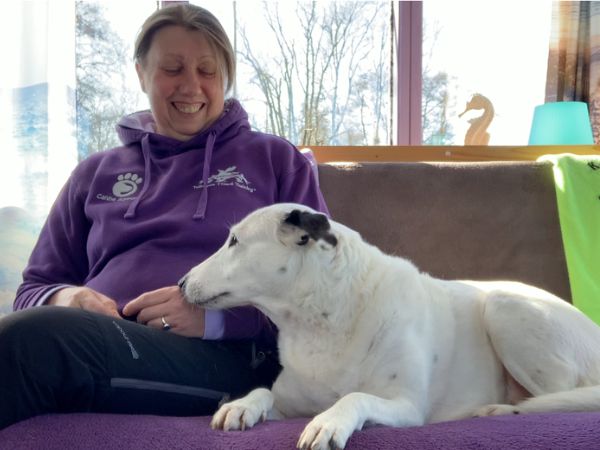
One of the Tellington TTouch® principles I find so helpful is “Change your mind, change your animal.”
For me, this is not about blaming ourselves or trying to magically change a dog by thinking differently. It is about changing the story we may have in our head.
If we think, “She’s being stubborn,” or “He’s just being naughty,” we can easily miss the real question: what is this dog finding difficult in this moment?
When we become curious instead of frustrated, we often see something new. We may notice worry, tension, confusion, pain, tiredness, or simply that the step we are asking for is too big.
That shift in our own thinking can change the whole conversation.
It helps us move away from judgement and towards understanding. It helps us ask better questions. It helps us see the dog in front of us, rather than the label we may have accidentally placed on them.
And that can be a very kind place to begin.
TTouch is a Conversation, Not a Task
When we do touch our dogs, it helps to remember that touch is a conversation.
It is not something we simply do to them. It is something we explore with them.
This means we stay curious before, during and after contact. We notice whether the dog softens, braces, moves closer, looks away, holds their breath, licks their lips, or shifts their weight.
This is where Tellington TTouch® for dogs can be so helpful, because it encourages us to notice the whole dog, not just the area we are touching.
We may need to adjust our position. We may need to use less pressure. We may need to work beside the dog rather than leaning over them. We may need to touch a different area, pause, or stop altogether.
A dog who turns their head away may be saying, “I need a little more space.”
A dog who moves closer may be saying, “That feels okay.”
A dog who becomes very still may not be relaxed at all.
A dog who sighs, blinks, softens through the shoulders or breathes more deeply may be showing us that their nervous system is beginning to settle.
These small moments are easy to miss when we are focused only on completing the task. But they are often where the most useful information lives.
When Your Dog Says “Not Today”
One of the kindest things we can do is respect the answer.
If your dog moves away, turns their head, becomes tense or seems unable to engage, it does not mean they are being difficult. It may mean the step is too much in that moment.
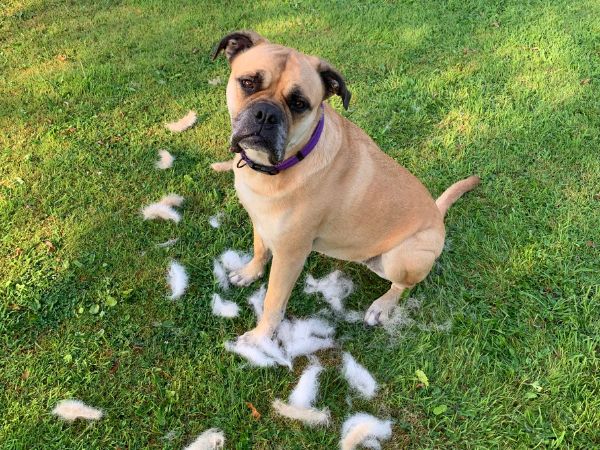
Remi is a lovely example of this with brushing.
There are times when she is much more comfortable being groomed, and there are times when she very clearly says, “Not today.” If she moves away or shows me she is not ready, that is okay. I do not need to make it into a battle. I can try again later, perhaps at a quieter time of day, when she is more settled and able to take part.
That small choice matters.
It tells her that I am listening. It tells her that grooming is not something that simply happens to her regardless of how she feels. It tells her that her communication has value.
And often, because there is no pressure, the next attempt is easier.
This is particularly important for sensitive dogs, rescue dogs, older dogs, puppies, adolescent dogs and dogs who have had uncomfortable handling experiences in the past.
But really, it applies to all dogs.
A “not today” is not rejection.
It is information.
What We Can Begin To Notice
You can begin very simply.
The next time you are about to touch or handle your dog, pause and notice three things:
- Is your dog standing comfortably and in balance?
- How is your dog breathing?
- Are they moving towards the interaction, away from it, or staying still?
You do not need to analyse everything perfectly. This is not about becoming tense or worried about getting it wrong.
It is about developing that steady presence.
Over time, you may start to notice patterns. Your dog may be comfortable with touch on one side of the body but not the other. They may cope well with the harness when you slow down, but struggle when everyone is rushing. They may enjoy contact in the evening but find it harder after a busy walk.
The more we practise reading dog body language, the more these small patterns begin to make sense.
These observations can help you make kinder, more effective choices.
How Tellington TTouch® Helps Us Listen
Tellington TTouch® offers much more than a set of bodywork movements.
At its heart, it is about safety, softness and cooperation. It helps us become more mindful in the way we approach, touch, guide and support the dogs we share our lives with.
Through gentle, mindful movement and careful observation, we can begin to notice how the nervous system responds. We can learn when a dog is ready, when they need a smaller step, and when our own breathing, speed or expectations may be influencing the moment.
Tellington TTouch® for dogs is not about rushing towards a result. It is about noticing, adapting and helping the dog feel calmer, more confident and better understood.
That does not mean we blame ourselves for our dogs’ difficulties. Not at all.
It simply means we remember that we are part of the conversation too.
Our hands matter.
Our breath matters.
Our timing matters.
Our predictability matters.
And when we change these small things, everyday handling can begin to feel safer and more cooperative.
A Kinder Way to Begin
Before we touch, we can ask a different question.
Not, “How do I get this done?”
But, “What is my dog already telling me?”
That small shift can change so much.
It can change how we put on a harness. How we dry paws. How we groom. How we comfort. How we help a worried dog feel a little more understood.
And sometimes, it can change how our dogs see us too.
They learn that we are listening.
They learn that their communication matters.
They learn that touch can become a conversation, with their comfort and choice respected.
That is a beautiful place to begin.
If You Would Like to Learn More
If this way of working speaks to you, my Introduction to Tellington TTouch® and Bodywork course is designed to help you explore these ideas gently and practically.
If you are curious about Tellington TTouch® for dogs, this course is a gentle place to begin.
We look at observation, bodywork, choice, handling and the small changes that can help dogs feel calmer, more confident and better understood.
You do not need to be experienced. You do not need to have a “perfect” dog. You only need curiosity, kindness and a willingness to pause.
Because before we touch, we listen.
And in that listening, our dogs often have so much to teach us.
FAQ: Reading Your Dog Before Touch
How do I know if my dog is uncomfortable being touched?
Look for small changes in breathing, posture, stillness, head turns, lip licking, leaning away, or moving away. These signs do not always mean “never touch me,” but they may mean your dog needs more time, a smaller step, or a different approach.
What should I do if my dog moves away when I try to groom them?
Pause and give them space. Moving away is useful communication, not bad behaviour. You may need to try again later, choose a calmer time of day, use a softer approach, or break grooming into much smaller steps.
Can reading my dog’s body language help with nail clipping?
Yes. Nail clipping can feel worrying for many dogs, so noticing their body language before and during the process is very important. Watch for tension, stillness, pulling the paw away, holding the breath, or turning the head. These signs can help you pause before the experience becomes too much.
Why does my dog move away when I try to touch them?
Your dog may be worried, uncomfortable, tired, sore, unsure, or simply not ready in that moment. Moving away is communication. Rather than seeing it as rejection or stubbornness, it can help to pause, notice their body language, and think about what might make the interaction feel safer.
Can Tellington TTouch® help dogs who do not like being touched?
Tellington TTouch® does not begin by insisting on touch. It begins with observation, approach, positioning, choice and helping the dog feel safer. For some dogs, the first step may simply be learning that they can move away, pause, and be heard.
Categories: : Tellington TTouch